What Does GLP-1 Do in the Body? The Hormone, the Drugs, and Why They Cause Weight Loss
Short answer
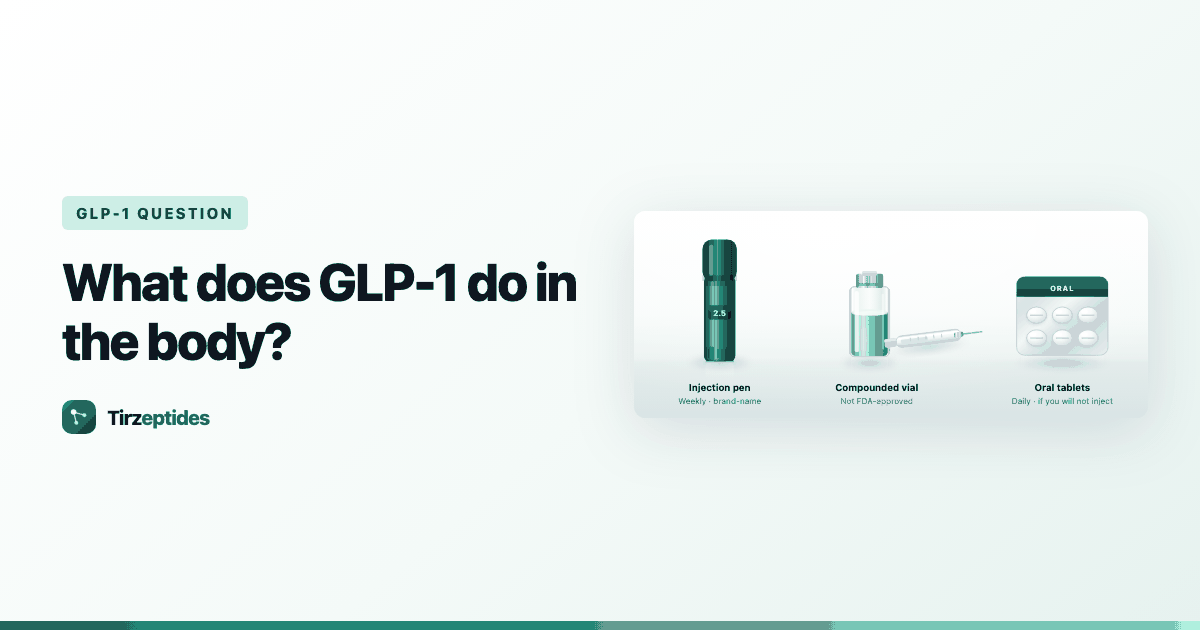
GLP-1 is a hormone your gut releases after you eat, and it does three things at once: tells the pancreas to release insulin when blood sugar is high, slows the stomach emptying so you feel full longer, and signals the brain to reduce appetite. The natural hormone is broken down in minutes. The drugs — semaglutide, tirzepatide and others — are engineered copies that survive for about a week, so those three effects run continuously instead of for a few minutes after a meal.1
This is not medical advice. Tirzeptides is an independent comparison site, not a healthcare provider. Nothing here creates a doctor-patient relationship or replaces a conversation with a licensed clinician. GLP-1 medications are prescription drugs with real risks and contraindications. Talk to a qualified provider before starting, stopping or changing any treatment.
The hormone itself
GLP-1 stands for glucagon-like peptide-1. It is one of the incretins — hormones released by cells lining the small intestine when food arrives. Its job is to coordinate the body's response to a meal. Within minutes of release it is chopped up by an enzyme called DPP-4, which is why the natural hormone cannot be used as a drug: it does not last long enough to matter.
The drugs solve that by altering the molecule so DPP-4 cannot break it down and by attaching it to a fatty-acid chain that binds to albumin in the blood, which keeps it circulating. Semaglutide's half-life is around a week, which is why it is a weekly injection.1
What it does in the pancreas
GLP-1 makes the pancreas release more insulin, but only when blood sugar is elevated. That glucose-dependence is the important feature: unlike older diabetes drugs, GLP-1 agonists rarely push blood sugar dangerously low on their own, because their effect switches off as sugar normalises. They also suppress glucagon, the hormone that tells the liver to release stored sugar. This is why these drugs were developed for type 2 diabetes first, and why the diabetes brands (Ozempic, Mounjaro) came before the weight-loss brands (Wegovy, Zepbound) of the same molecules.
What it does in the stomach
GLP-1 slows gastric emptying — the rate at which food leaves the stomach. Food sits longer, fullness after a meal lasts longer, and the sugar from a meal enters the blood more gradually. This is also the source of the most common side effects: nausea, bloating and constipation are what slowed emptying feels like, especially in the first weeks and after each dose increase. That effect partly wears off with continued use, which is one reason side effects tend to ease over time while appetite suppression persists.
bmiMD
Widest plan range, microdosing · scored 8.0/10
- Publishes prices for every plan openly, before any intake
- Offers dedicated microdose plans for both molecules
- Wide range of adjunct options including metformin and B12
What it does in the brain
This is the part that drives weight loss. GLP-1 receptors sit in the hypothalamus and brainstem, the regions that regulate hunger and satiety. The drug acts on them directly, reducing appetite, reducing the reward value of food, and making it easier to stop eating sooner. People commonly describe it as the "food noise" going quiet. The weight loss is not primarily from the stomach effect; it is from eating less because you want less, and the trials are consistent that this is the dominant mechanism.1
What tirzepatide adds
Tirzepatide activates the GLP-1 receptor and the receptor for a second incretin, GIP. GIP appears to add effects on fat metabolism and may improve tolerability at a given level of appetite suppression. The clinical result is that tirzepatide produces more weight loss on average than semaglutide — about 20% versus about 14% at 72 weeks in the only direct comparison — which is covered in tirzepatide vs semaglutide.
What it does not do
- It does not burn fat directly. Weight comes off because energy intake falls.
- It does not stop working when weight plateaus. The plateau is the new equilibrium at a lower intake.
- It does not keep working after you stop. The hormone effect ends when the drug clears, appetite returns, and most people regain much of the weight unless something else changes.
Everything on this page describes the FDA-approved molecules studied in trials. Compounded semaglutide and tirzepatide are intended to be the same molecules but are not FDA-reviewed for potency or purity, so whether a given compounded product does all of this depends on what is actually in the vial.
Sources
- Semaglutide — StatPearls — NIH National Library of Medicine
- Do no harm: managing nausea and vomiting in GLP-1 based obesity therapies — PubMed Central
Our top three, compared
Ranked by the six published weights on how we rank. All three are paid partners.
Related questions
- Which GLP-1 is best for weight loss?
- Which GLP-1 is best for cardiovascular benefit?
- How long do GLP-1 side effects last?
- How fast does GLP-1 weight loss happen?
- Does compounded GLP-1 need to be refrigerated?
All GLP-1 questions answered → · GLP-1 price index → · Compare the 8 providers →