GLP-1 Side Effects and Who Should Not Take Them
Most people get gut symptoms during dose escalation. A smaller number face problems that need medical attention, and some people should not take these drugs at all.
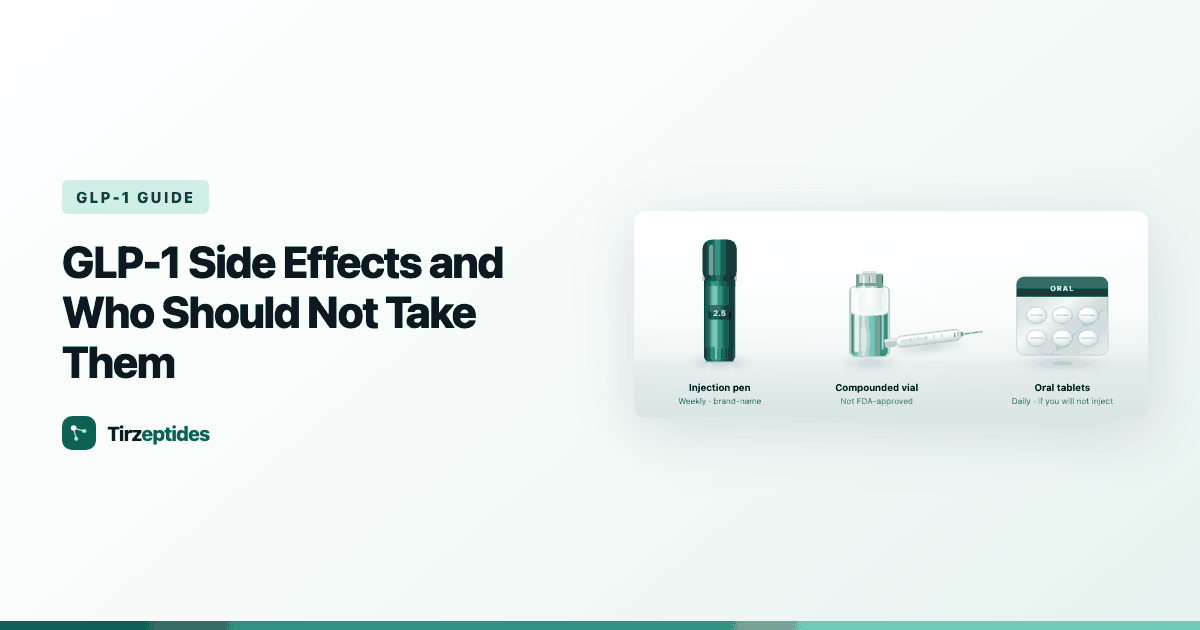
Read this with a clinician, not instead of one. This page summarises publicly documented safety information. It is not a substitute for the prescribing information or for medical advice from someone who knows your history.
Common side effects
The overwhelming majority of side effects are gastrointestinal, appear during dose escalation and ease over weeks:
- Nausea — the most common by a distance
- Diarrhoea, vomiting, constipation
- Abdominal pain, bloating, reflux
- Fatigue and headache
- Injection-site reactions
These are dose-related. They typically appear in the days after a dose increase and settle before the next one, which is why escalation schedules are gradual.
Serious risks
- Pancreatitis. Severe, persistent abdominal pain, often radiating to the back and often with vomiting, needs urgent medical assessment.
- Gallbladder disease. Rapid weight loss raises gallstone risk. Pain in the upper right abdomen, fever or jaundice warrants prompt review.
- Hypoglycaemia. Uncommon alone but a genuine risk in combination with insulin or sulfonylureas, which may need dose adjustment.
- Kidney injury. Usually secondary to dehydration from prolonged vomiting or diarrhoea rather than a direct drug effect.
- Diabetic retinopathy complications. Documented with semaglutide in people with existing retinopathy and rapid glucose improvement.
- Aspiration under anaesthesia. Delayed gastric emptying means your stomach may not be empty when you assume it is. Tell any anaesthetist or surgeon that you take a GLP-1.
The boxed warning
Both tirzepatide and semaglutide carry a boxed warning regarding thyroid C-cell tumours, which were observed in rodent studies. Whether this translates to humans is not established. The resulting contraindication is firm: these drugs should not be used by anyone with a personal or family history of medullary thyroid carcinoma, or with multiple endocrine neoplasia syndrome type 2.
HealthRX
Best overall · scored 8.2/10
$99/mo semaglutide on a 12-month plan
- LegitScript-certified (certification #50087439)
- Among the lowest per-month pricing on this list
- Same price at every dose level
Who should not take a GLP-1
- Personal or family history of medullary thyroid carcinoma
- Multiple endocrine neoplasia syndrome type 2
- Previous serious hypersensitivity reaction to the drug
- Pregnancy, trying to conceive, or breastfeeding
- History of pancreatitis warrants serious caution and specialist input
- Active severe gastrointestinal disease, including gastroparesis
- A history of eating disorders warrants careful specialist assessment
Muscle loss: the under-discussed one
A substantial share of weight lost on GLP-1s is lean mass rather than fat, with commonly cited figures in the region of a quarter to 40% depending on the study and population. That matters for metabolic rate, strength and healthy ageing.
The mitigations are unglamorous and effective: keep protein intake high, do resistance training two or three times a week, and do not chase the fastest possible rate of loss. Of the providers we reviewed, Pallas Health is the one that makes muscle preservation an explicit part of its clinical approach.
Reducing side effects during escalation
- Do not rush the titration schedule. Going up faster is the single biggest driver of misery.
- Eat smaller meals, more slowly, and stop when full.
- Reduce fatty and fried food while nauseous.
- Keep fluid intake up, especially with vomiting or diarrhoea.
- Ask your provider about holding at a dose rather than escalating if symptoms are not settling.
When to contact a provider urgently
Severe or persistent abdominal pain; persistent vomiting; signs of dehydration; upper right abdominal pain with fever or jaundice; a lump or swelling in the neck, hoarseness or difficulty swallowing; or symptoms of a severe allergic reaction.
Providers differ in how easy they make it to reach a clinician when something goes wrong. That is one of the criteria in our provider comparison.
Questions people ask about this
Our top three, compared
Ranked by the six published weights on how we rank. All three are paid partners.
Related guides
- Tirzepatide vs Semaglutide: What the Head-to-Head Trial Actually Found
- Compounded vs Brand-Name GLP-1: Cost, Legality and What Actually Differs
- How Much Does Tirzepatide Cost in 2026? Every Route Priced
- Microdosing GLP-1s: What It Is and Who It Actually Helps
- How to Get Tirzepatide or Semaglutide Without Insurance
- The 8 best GLP-1 providers, compared